THE DESIGN
Dart or glider
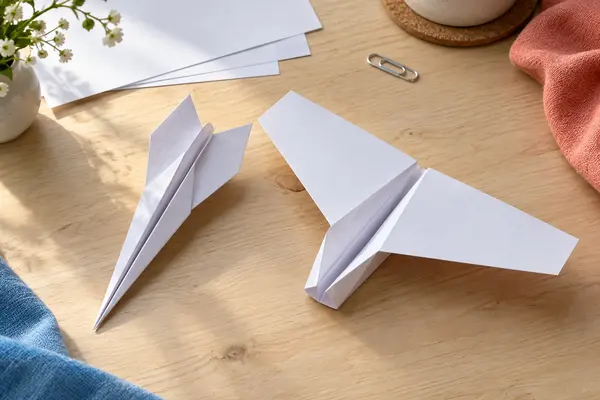
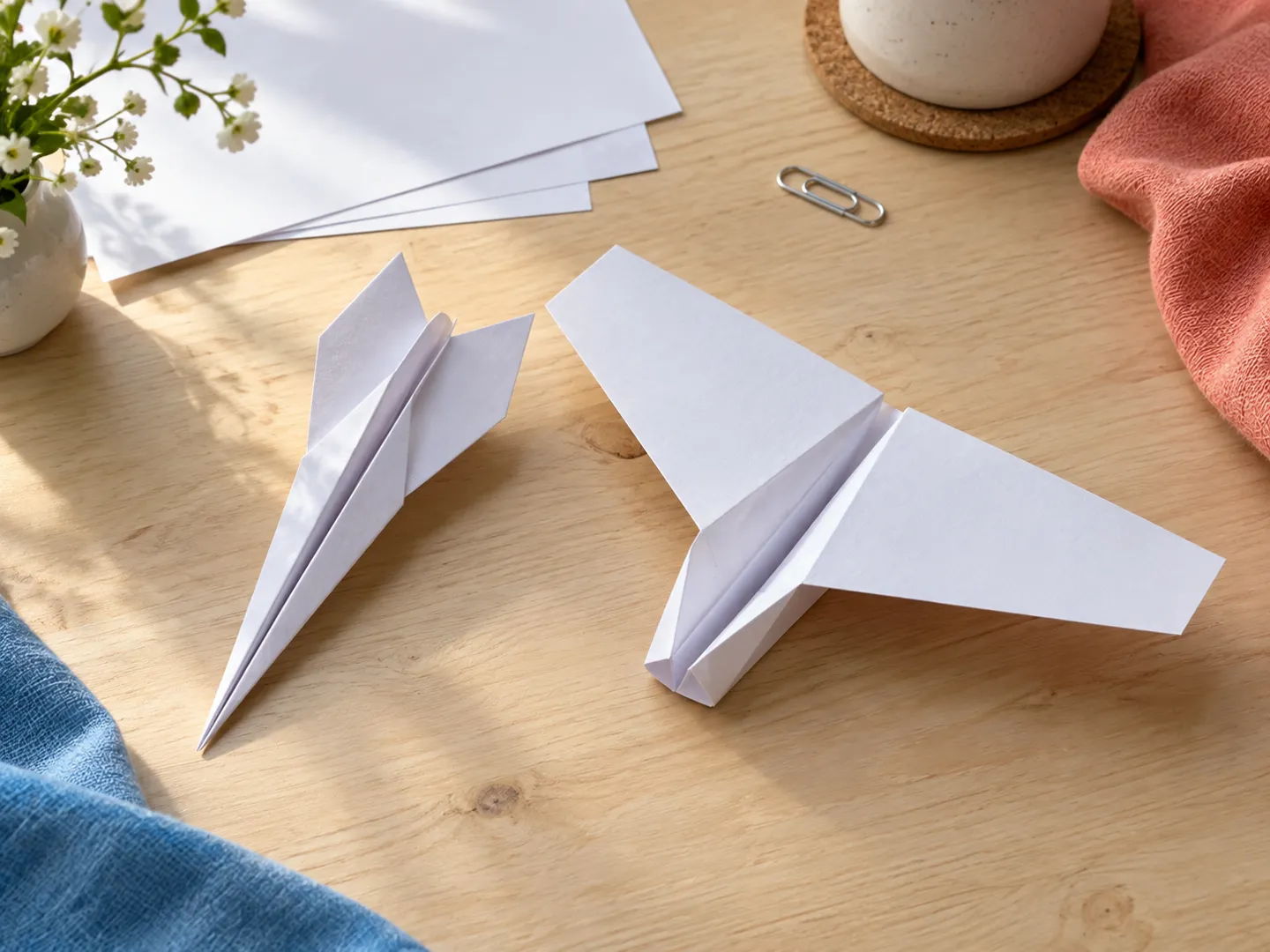
Narrow wings need speed; long, wide wings make lift gently. Match the plane to the throw.
Compare the two doodleplanes
THE SCIENCE OF A GOOD GLIDE
A paper plane is a real glider, and the same rules apply.
Fix your flight
GLIDEdon't just throw
Lift, drag and balance decide whether a sheet of paper dives into the carpet or sails across the room. Here is what NASA and university researchers say about why paper planes fly, in plain English.
Plain English, with the sources linked.
Updated
THE SHORT ANSWER
No engine, no pilot: once it leaves your hand,
the paper and the air do all the work.
THE DESIGN
Narrow wings need speed; long, wide wings make lift gently. Match the plane to the throw.
Compare the twoTHE GLIDE
The smaller the glide angle, the further a glider travels for each bit of height it loses.
Read the glide factsTHE BALANCE
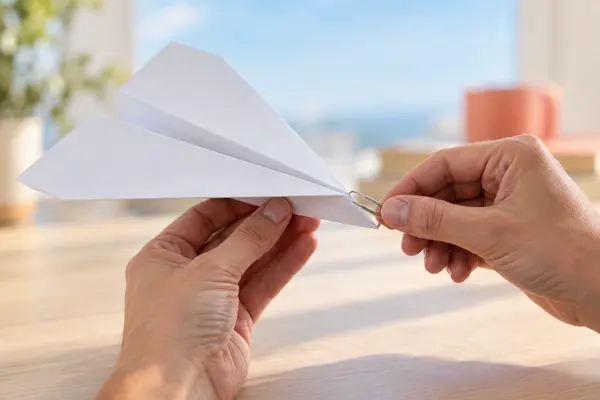
Smooth gliding needs the centre of mass in the right place. A fold or a clip moves it.
Tune your planeA QUICK FLIGHT FIXER
Pick the throw you like, or the problem you see. Each answer comes from the NASA and NYU sources listed at the bottom of the page.
The bar is a rough guide to how much speed each case relies on, not a measurement.
TWO CLASSIC DESIGNS
Lift depends on speed and on wing area.
Each design leans on one of them.
2× speed = 4× lift
Lift from speed
NASA's lift equation multiplies the square of the speed by the wing area. A dart has little wing area, so it relies on a fast throw. The catch: drag also rises with the square of speed, so the dart slows quickly.
THE DART · NARROW WINGS
Long span > stubby
Lift from wing area
More wing area makes enough lift at a gentler speed. NASA notes that wings with a long span and short chord also have lower induced drag than short, wide wings of the same area, which helps a slow, flat glide.
THE GLIDER · LONG, WIDE WINGS
Neither design always wins. A dart suits a hard throw and a glider suits a gentle launch, so fold one of each and try both in the same space.
TRY IT NOW
Run a thumbnail along every crease and check that the two wings match in size and angle before the first throw.
Throw a dart hard and level. Launch a wide-winged glider gently and let its wings do the work.
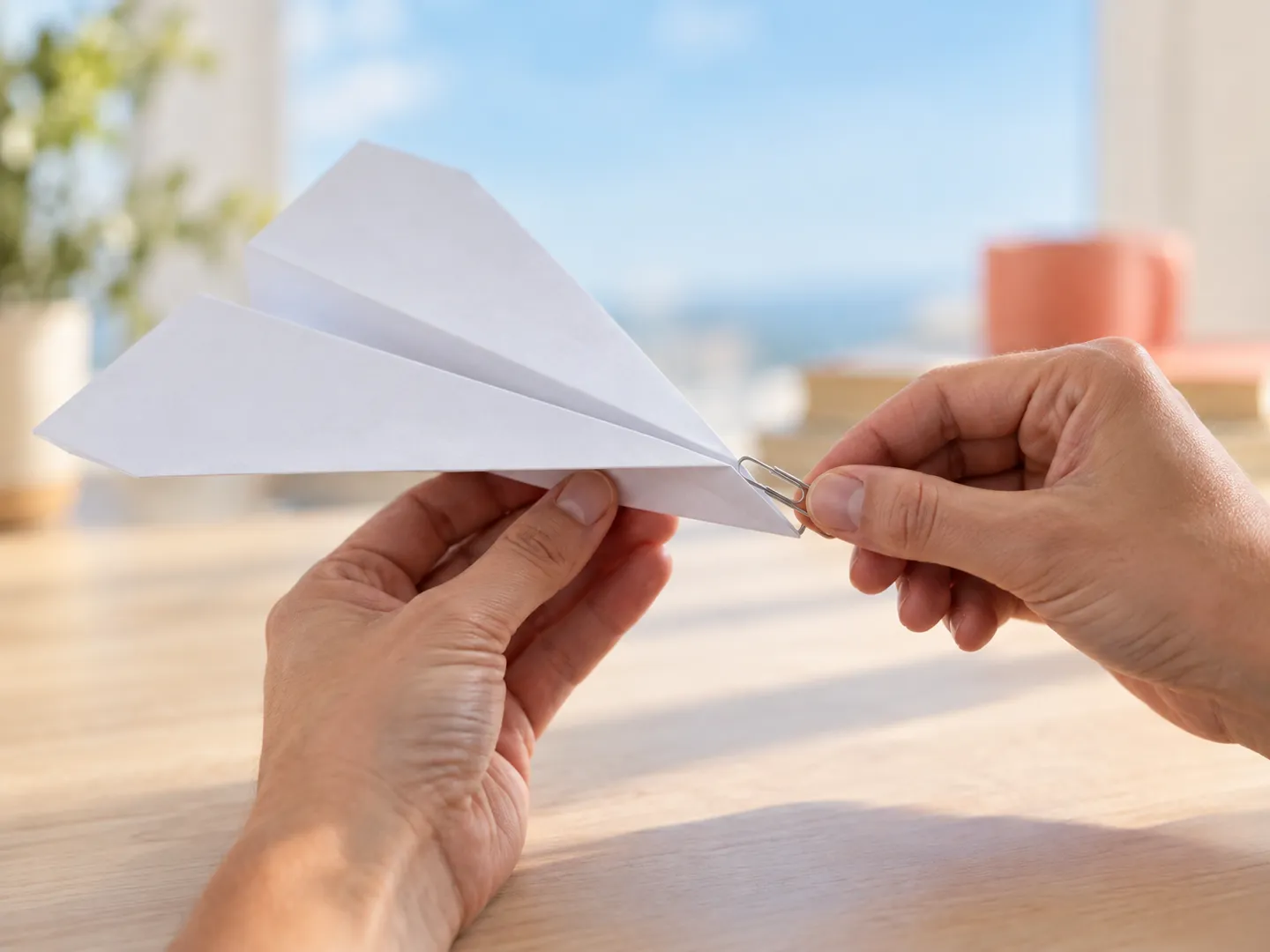
Fold the nose over once more, or slide a paper clip on, then test again. The NYU researchers note it takes a little trial and error.
Launch from the same height each time and pace out the distance. Distance divided by drop is a simple glide score to compare.
GLIDE FACTS
NASA calls paper planes the most obvious example of gliders: aircraft with no engine. Your throw starts the motion, and from then on the weight is opposed by lift and drag.
Lift and drag both depend on the square of the speed. NASA puts it simply: doubling the velocity will quadruple the lift and drag.
A glider's path slopes down at its glide angle. The smaller that angle, the further it flies for a given drop in height, and the angle is set by the balance of drag and lift.
A 2022 NYU study in the Journal of Fluid Mechanics found that on thin, flat wings the centre of pressure shifts with the flight angle, which the authors call the secret to the stable flight of paper planes.
Guinness World Records lists the farthest flight by a paper aircraft, thrown indoors, as 98.43 m (322 ft 11 in), set in Shanghai, China, on 28 December 2025.
QUICK QUESTIONS
Short answers to the questions people ask most.
A paper plane is a glider: it has no engine. Your throw starts it moving, and from then on its weight is opposed by lift and drag from the air flowing over the wings, as NASA explains.
It depends on the throw. A narrow dart needs speed to make enough lift, so it suits a hard throw. A wide glider makes lift at lower speed and suits a gentle launch. Try both in the same space.
To move the centre of mass. Researchers at New York University found that a good glider needs its centre of mass in a "just right" place, which good paper planes achieve by folding the front edge over several times or adding a paper clip.
Guinness World Records lists the farthest flight by a paper aircraft as 98.43 m (322 ft 11 in), set indoors in Shanghai, China, on 28 December 2025.
Wings make a drag called induced drag as a side effect of lift. NASA notes that wings with a high aspect ratio, meaning long span and short chord, have less induced drag than short, wide wings of the same area.
A NAME THAT FLIES
doodleplanes.com is part of the DoodleSale portfolio. It isn't in an auction right now, but you can ask about leasing it.